Fit
A screening tool that identifies which individual contributor applicants are most likely to thrive based on matching their motivations and work style preferences to the role

A screening tool that identifies which individual contributor applicants are most likely to thrive based on matching their motivations and work style preferences to the role
TRUSTED BY ORGANIZATIONS EVERYWHERE

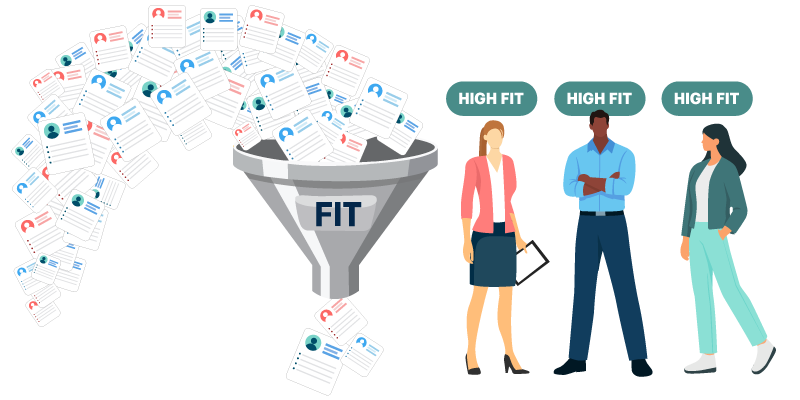
In an era of highly-polished cover letters and resumes, Fit allows you to see the applicant behind the application. Every applicant is evaluated across Eudara’s Seven Fit Dimensions — a structured framework that measures how closely an applicant’s motivations and work style preferences match the needs of the role
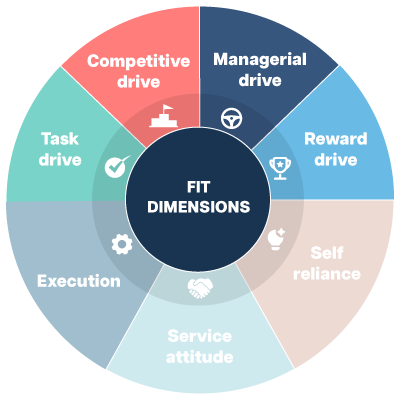
A candidate’s motivational profile measures the relative importance of four key drivers of engagement in the workplace
Task Drive: a motivation to complete tasks to a high standard and/or to work on tasks of interest
Managerial Drive: a desire for opportunities to lead, influence, and/or hold positions of authority
Competitive Drive: a drive to achieve and exceed clearly established and measurable goals
Reward Drive: the importance placed on tangible rewards and/or verbal recognition for their efforts
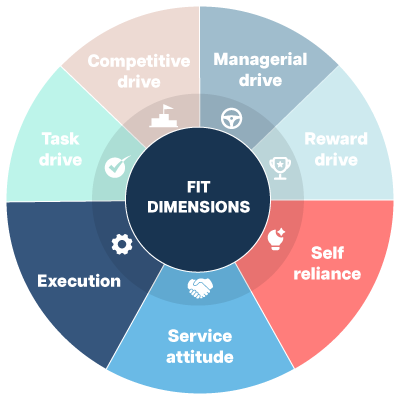
Work style dimensions measure a candidate’s preferences that can influence how they approach their work
Execution: the preference for working hands-on to get tasks done quickly
Service Attitude: the desire for others to be pleased with their work
Self-Reliance: the preference for autonomy and working independently
1. Applicants complete Fit
Each applicant completes the Fit assessment in less than 20 minutes, providing insight into their motivations and work style preferences
2. Responses are compared to the Target Profile
Fit compares applicant responses to the Eudara Target Profile — a model describing which motivations and work style preferences best align to the needs of independent contributor positions. Organizations can optionally create a Custom Target Profile based on the responses of select individuals in their organization, refining the target profile to focus on the characteristics of their own employees.
3. Applicants are ranked by Fit
The Fit dashboard provides an indication of how closely the motivations and work style preferences of applicants align with the Target Profile. This gives hiring teams a clear, consistent way to compare applicants beyond their resumes and experience.
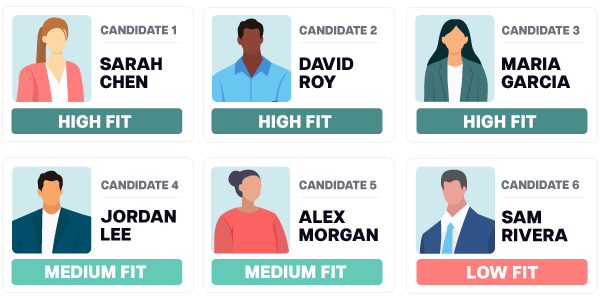
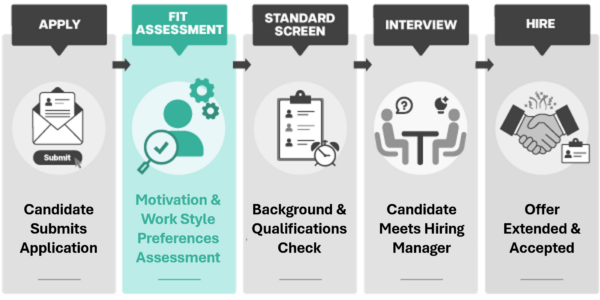
Fit is typically performed early in the hiring process. By assessing motivations and work style preferences alongside resumes and experience, Fit helps teams understand how each applicant matches the Target Profile. This allows them to focus their screening and interview time where there is stronger alignment, while still using traditional screening and interviews to provide the broader context needed for hiring decisions.
Fit gives hiring teams insight into the motivations and work style preferences that resumes can’t reveal. See how Fit can help reduce screening effort while bringing greater depth and a clearer understanding of alignment earlier in your hiring process.
Stop spending hours reviewing resumes and cover letters for candidates who are unlikely to Fit. Fit identifies applicants whose motivations and work style preferences are a poor match with your hiring profile—before recruiters invest time reviewing their applications.
Save even 5–10 minutes per applicant across dozens or hundreds of applications, and the impact adds up quickly . Fit can eliminate hours of repetitive, low-value screening work from every hiring cycle.

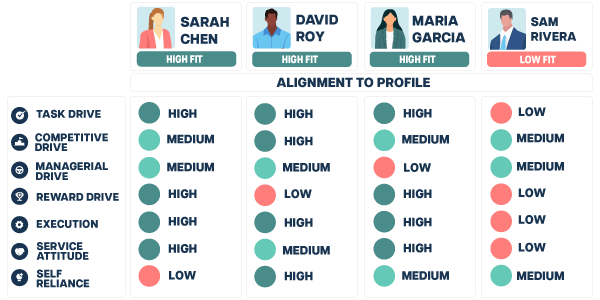
Fit helps recruiters look beyond credentials to build shortlists that are more informed, balanced, and aligned with what the role requires.
When recruiters are buried in applications, the candidates most worth pursuing can get lost in the queue. By the time they’re identified, they’ve already interviewed elsewhere—or accepted another offer. Recruiting surveys show more than half of job seekers have reported abandoning a role because the hiring process took too long.
Fit enables recruiters to quickly engage high-potential candidates and keep them moving before competitors have a chance to snap them up.

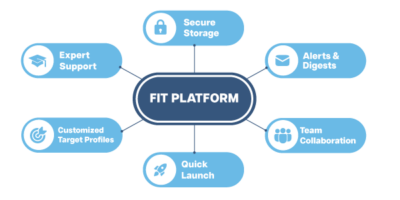
Fit’s secure web platform makes it easy to launch, manage, and collaborate on assessments across recruiters, hiring managers, and multiple hiring campaigns.
Resumes describe past experience. Fit evaluates the motivations and work style place preferences that influence how well someone is likely to perform in your organization. As AI-generated applications become more common, these insights provide an important additional perspective for identifying promising candidates.
The seven Fit dimensions represent workplace characteristics that have consistently demonstrated value in understanding employee motivation, behavioural tendencies and preferences, and role alignment. Together, they provide a practical, evidence-based framework for comparing applicants that complements their experience and qualifications.
A target profile defines the workplace characteristics associated with success in a particular role. Every applicant is compared against this profile, allowing hiring teams to quickly and objectively identify those whose motivations and work style preferences that most closely align with the position.
It typically takes an applicant less than 20 minutes to complete Fit.
We have found that completion rates exceed 97%, meaning that fewer than 3 people in 100 drop out of the assessment process when they are asked to complete the assessment.
Non-completion doesn’t tell you whether someone is a good or bad candidate, it simply means they chose not to complete a step in the hiring process. Organizations can use completion as an additional signal of candidate engagement.
It is fast and easy to begin with the Eudara Target Profile. If you have a lot of high performers in the role and you want to refine the target profile, Fit makes this easy to accomplish. The combination of the Eudara Target Profile allows hiring organizations to get going quickly, while the Custom Target Profile enables organizations to focus on the qualities commonly found among individuals that are thriving in the role as part of their screening process.
No. Fit improves the quality of your shortlist by identifying applicants most worthy of further consideration. It complements interviews, technical assessments, and comprehensive assessments such as Core, helping hiring teams make better-informed decisions throughout the hiring process.
No. Fit is a decision-support tool. Organizations decide how assessment results are incorporated into their hiring process. The platform is designed to help recruiters prioritize applicants, not replace human judgment or intuition.
Not easily. Unlike assessments that measure knowledge, skills, or competencies, Fit measures a candidate’s work style preferences and motivations. Because of this, there are no “correct” answers to optimize for, making it much more difficult for applicants to use AI to manipulate the results. By focusing on preferences rather than abilities, Fit helps hiring organizations identify candidates who are more likely to work effectively with existing team members and naturally align with the organization’s culture, values, and ways of working.
See firsthand how Fit can help you better see the candidate behind the application